What I mean when I say "Design"
When I ask you to think of the color red and I picture red in my own mind, we almost certainly see a different thing.
Even if in the off chance we're both picturing a pantone element like square covered in a single hue the chances of those hex codes perfecty aligning are infinitesimally small.
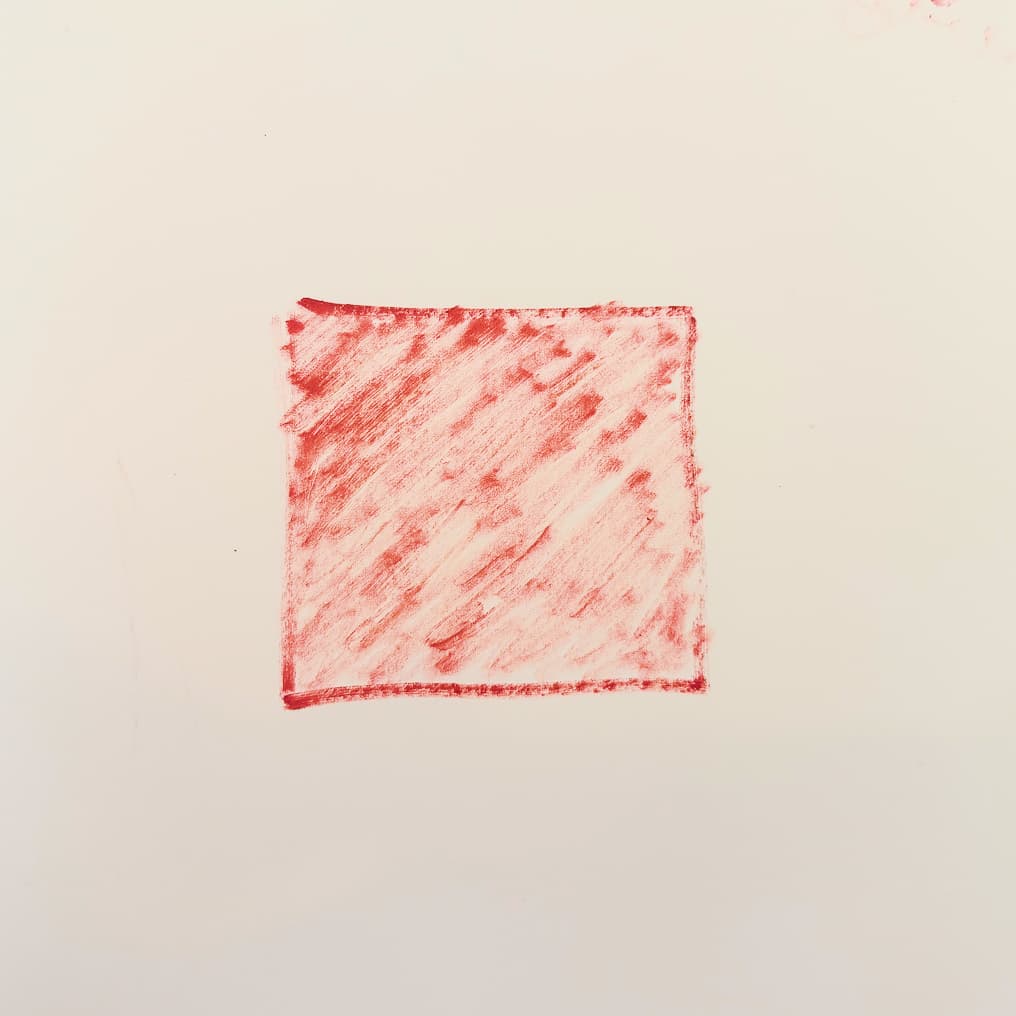
The trouble is we're both using "red" which simulates alignment but we're talking about entirely different things.
This incongruency is usually not something we actively recognize, but even if it were, the stakes are low enough when it comes to our use of "red" that we probably wouldn't even bother aligning on what we really mean.
But now consider words like "promise" or "design".
These words carry different stakes depending on context but I certainly have a much stronger pull to make sure we're aligned on the meaning of "promise" than I do "red".
What's interesting about the word "design" is that it probably means too many different things to too many different people. Everyone has a stake in design and an impression of what it means to them that they've come to on their own.
The problem is that as a designer, any misrepresentation of "design" is non-trivial. They have real consequences that affect how you see yourself, how collaborators percieve you and the quality of your work-life.
When people see "design" as "screens in figma" for example, they loop designers in to "flesh out their idea" or "clean it up" or worse, "make it pretty." Designers start believing that what they produce is sceens in figma. Wider stakeholders literally don't know how to leverage designers for anything other than this. You constantly feel under-leveraged, like you can't get a seat the table, and your are there to polish everyone else's turds (bit of stretch). You feel fear in AI adoption because you see the value you bring as something that can be easily trained against.
I genuinely believe the gap between Design being fully leveraged as a problem solving partner and being a less leveraged production tool is a communication problem similar to the one we have with "red".
Which is why I also find it valuable to articulate what I believe Design to be.
Defining "Design"
Forgive me, I'm still work-shopping the exact words...
Design is an infinitely compressable, universally applicable problem solving framework and "design-ing" is the application of this framework.
This framework, which is more or less the double diamond process, can be applied to any problem, no matter the size, complexity or context.
The same approach that solves a container overflow issue, is the same approach that solves the reconciliation of Dia profiles and spaces in a single simple gesture, is the same approach that solves how to steer a company towards profitability, is the same approach that lands re-usable rockets.
The examples above ascend in leverage yet through Design can be approached the same way. The "compressible" part of my defintion is trying to describe this leverage-agnostic quality.
I find it first incredibly empowering to think I'm continually refining a technique that can be applied to the world's largest problems. And then I find it incredibly daunting to think that I might have the responsbility to solve them.
Personally, I'm on a quest to find holes in this definiton. I'm slowly applying Design against higher and higher leverage problems. From working in a single fluid motion across software making's disparate functions, to designing the incentives that align a multi-billion-dollar revenue business, I've yet to find an upper limit.
I realize this can come across like I'm suggesting Designers take on even more than they already do. Which I am lol. But I think it's important I clarify this comes by way of two minds.
One where we all need grace with ourselves to take on as much or as little we can in this moment. And another where we all could be much more ambitious with the problems we try to solve.
YOU CAN DO ANYTHING!

Design is not Art
Someone or something(?) must have a problem for a designer to solve. Design cannot exist without an audience outside of yourself and a problem/need.
This means that Art cannot be Design.
Art doesn't require a problem or an audience outside of yourself. Art is an expression. It's unimportant what it does. The most important thing about a Design is what it does.
In a market context the things we make fall along a spectrum ranging from Design to Art, where Art is most Art-ful when it's the most honest expression of a truth excavated from an individual's inner depth, made for the purpose of realizing this truth for oneself and Design is most Design-ful when it is in complete service to an audience outside of oneself.
You can see where Pop music starts to turn into more of a formulaic process that is still Art but starting to look more like a product and Indie apps are starting to capture much more of the creator's fingerprints, still made for others but moving closer to Art.
All employed Designers design products within a market. We know from the study of more densely populated markets than software that something interesting happens as competition increases. The path to market share starts to look much more like creating Art in order to build resonance with consumers.
Think Arc, Ableton, Basecamp.
All I got for now. This is a live essay I'll revise and add to intermittenly.